
48-Hour Deals in UAE are everywhere — from food delivery apps to online stores — but most people don’t realise how these offers actually work and whether they really save money.
48-Hour Deals in UAE sound exciting. You open an app like Noon UAE, see a countdown timer, bright banners saying “ends in 2 days”, and suddenly it feels like you either buy now… or miss out forever.
But after seeing these deals pop up again and again — especially across food delivery apps, fashion stores, and electronics websites — I started wondering:
are these actually good deals, or just well-designed pressure tactics?
So instead of guessing, I looked at real prices on platforms like Amazon UAE, tracked a few offers before and after the “48-hour window”, and compared what actually changes.
The results were… not what most people expect.
What Are 48-Hour Deals in UAE (and Why They Feel So Urgent)
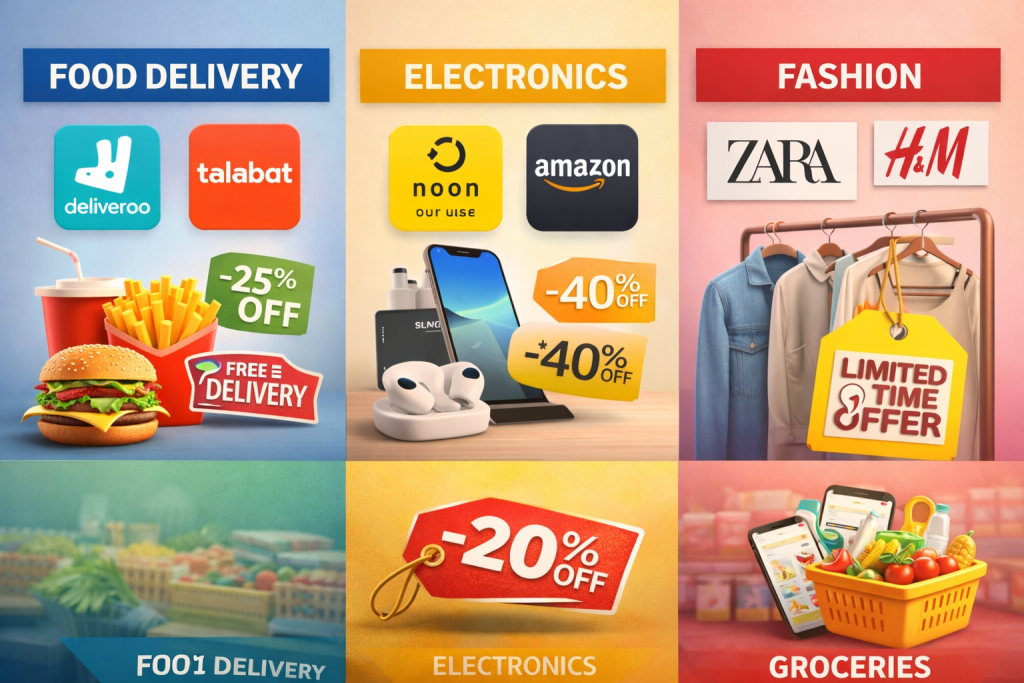
In the UAE, “48-hour deals” are basically short promotional campaigns designed to create urgency. You’ll see them everywhere:
- Deliveroo / Talabat → meal bundles, free delivery, app codes
- Noon / Amazon UAE → electronics, flash discounts
- Zara / H&M → limited-time fashion drops
- Grocery apps → weekend baskets and quick discounts
On the surface, it looks like:
limited time = best price
But psychologically, it’s more like:
limited time = faster decision-making
You don’t compare Noon VS Talabat. You don’t think too much. You just click.
And that’s exactly the point.
What I Actually Did (Simple Test)
Instead of trusting the banners, I tracked a few products and services across:
I checked:
- price before the “48-hour deal”
- price during the deal
- price after it ended
No tools, no complicated setup — just manual checking over a few days (which is what a normal user would realistically do).
What the Numbers Actually Show
| Category | Product / Service | Regular Price (AED) | 48-Hour Deal (AED) | Price After Deal (AED) | Real Saving |
|---|---|---|---|---|---|
| Food Delivery | Meal combo (Deliveroo) | 75 | 59 | 60 | ~16 AED |
| Electronics | Wireless headphones | 299 | 249 | 245 | ~4 AED |
| Fashion | Zara jacket | 199 | 149 | 149 | 50 AED |
| Grocery | Weekly basket | 120 | 110 | 108 | ~2 AED |
| Beauty | Skincare bundle | 220 | 180 | 175 | ~5 AED |
What This Means (Realistically)
At first glance, everything looks discounted.
But when you look closer:
- some deals are genuinely good
- some are barely different from the normal price
- some are just… recycled
And that’s where things get interesting.
The “Fake Urgency” Pattern
After checking multiple deals, one pattern kept repeating:
the same “limited-time deal” comes back again
Especially with:
- food delivery apps
- grocery platforms
- subscription-based services
You’ll see:
- “48 hours only”
- then next week… the same offer again
- sometimes even with the same price
So technically it’s a deal.
But it’s not actually rare.
Where 48-Hour Deals DO Work
To be fair — not everything is fake.
There are cases where these deals actually make sense.
1. Fashion (especially seasonal)
End-of-season drops are usually real.
Once the stock is gone, it’s gone.
2. First-time user offers
Apps like Deliveroo or Talabat sometimes give real discounts for first orders.
These are usually the best deals available.
3. Bundle offers
Sometimes you’re not getting a lower price — but you’re getting more value.
Example:
- free drink
- free delivery
- combo upgrades
Where You Should Be Careful
This is where most people overpay without realising it.
Electronics
Prices often fluctuate anyway.
A “48-hour deal” might only be:
3–5 AED cheaper than normal
Grocery apps
Discounts look good, but:
- delivery fees
- service charges
- minimum order requirements
can cancel out the savings.
Repeating app promos
If you’ve seen the same deal 3 times in a month…
it’s not urgent
it’s part of the normal pricing strategy
The Hidden Cost Nobody Talks About
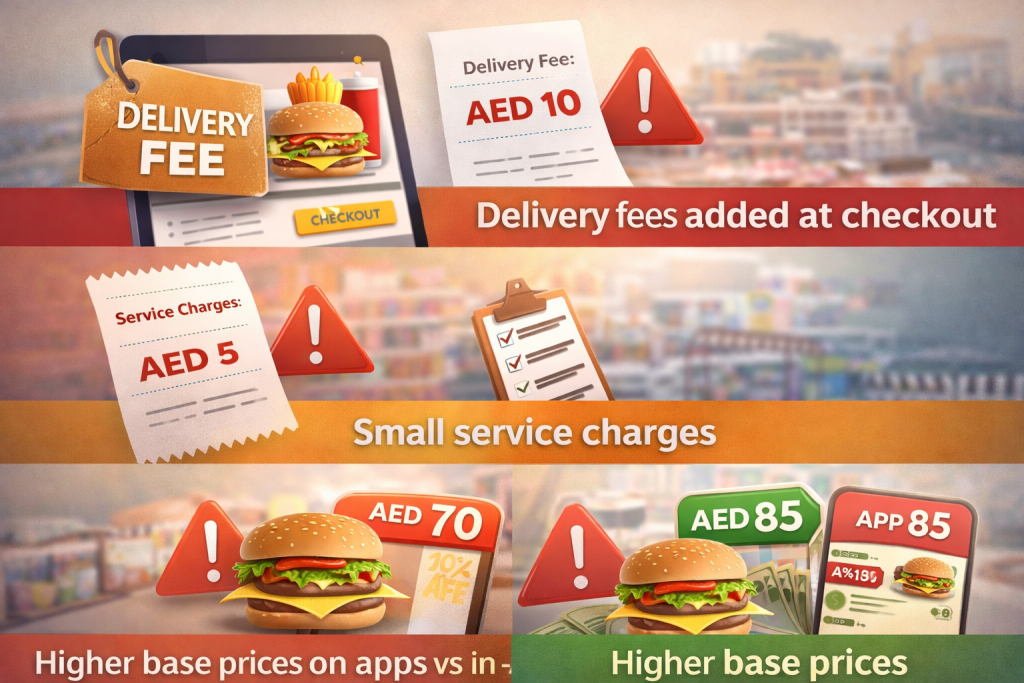
Even when a deal is real, there’s often something else happening:
- delivery fee added at checkout
- small service charges
- higher base prices on apps vs in-store
So you might save:
10 AED on the deal
But lose:
8–12 AED on fees
Which basically cancels everything.
How People Actually Save Money (Not Just Feel Like They Do)
From everything I tested, the biggest savings don’t come from the deal alone.
They come from combining things.
The smarter approach:
- check if the price is really lower
- apply a working coupon code
- use app-only discounts
- avoid peak delivery times
Example:
- deal price: 60 AED
- coupon: -10 AED
- off-peak delivery: -5 AED
real total: 45 AED
That’s where the difference happens.
Why These Deals Still Work So Well
Even if people know all this, they still click.
Because:
- timers create pressure
- “ending soon” feels urgent
- discounts feel like a win
And honestly — sometimes it is a win.
Just not always for the reason you think.
FAQ
Do 48-Hour Deals in UAE actually expire after 48 hours?
Not always. Many deals come back again later, sometimes with the same price. The time limit is often more about urgency than exclusivity.
Are 48-hour deals cheaper than normal prices?
Sometimes yes, but often the difference is small. In some cases, the same price is available outside the deal period.
Which types of 48-hour deals are the most reliable?
Fashion sales, first-order offers, and bundle deals tend to offer real value. Electronics and grocery discounts are more inconsistent.
Why do the same deals appear again and again?
Because they work. These campaigns are designed to drive quick decisions, not necessarily to offer the lowest possible price every time.
How can I tell if a deal is actually good?
The easiest way is to compare the price before and after, check for extra fees, and see if the same deal appears regularly.
Do coupons work together with 48-hour deals?
Sometimes yes. Combining a deal with a valid coupon code is often the best way to maximise savings in the UAE.